Creative Automation Platforms have become essential for modern marketing teams in 2026. In this ultimate guide, you’ll learn how CAPs streamline creative production, automate scaling and publishing, enable dynamic personalization, and power real-time optimization, helping brands launch faster, collaborate smarter, and drive measurable performance across every digital channel.
Guide
The ultimate guide to creative automation platforms

Quick Links
- What Is a Creative Automation Platform?
- Why Creative Automation Matters in 2026
- Core Features of a Creative Automation Platform
- Benefits of Creative Automation for Design Teams
- How Creative Automation Increases Production Efficiency
- How Creative Automation Improves Collaboration and Workflow
- How Creative Automation Simplifies Live Campaign Optimization
- How to Personalize at Scale with Dynamic Creative Optimization (DCO
- Conclusion
Last updated: October 14, 2026
How can brands automate ad creative production?
Short answer: Brands automate ad creative production by building one master design and generating every size, language and market version from it, using templates, data feeds and brand rules. Direct publishing then pushes edits to live ads without rebuilds or re-trafficking, replacing manual resizing and re-versioning with a repeatable workflow.
New to the topic? Start with the explainer, What is creative automation?, or take the next step with The Bannerflow Guide to Implementing Creative Automation.
What Is a Creative Automation Platform?
Short answer: A Creative Automation Platform is a cloud-based system that lets marketing teams design, scale, personalize, publish, and optimize digital creatives automatically, across formats and channels, without relying on manual production or coding.
A Creative Automation Platform is an advanced, cloud-based solution that empowers marketing teams to design, scale, personalize, distribute, and optimize digital creatives automatically and in real time. It centralizes the entire creative workflow, bringing design, content, data, activation, and performance insights into one unified system.
Unlike traditional ad design software or legacy Creative Management Platforms (CMPs), a modern Creative Automation Platform removes repetitive manual work and streamlines end-to-end production. The result is faster creative output, lower production costs, and higher-performing digital advertising across all channels.
In essence, it functions as an always-on creative engine for ambitious brands, helping teams accelerate production, increase efficiency, and achieve greater creative impact at scale.
Creative automation solves this by turning complex creative production into streamlined, intelligent workflows that scale effortlessly.
Why Creative Automation Matters in 2026
Short answer: Creative automation matters because brands must produce more assets, in more formats, with more personalization, while budgets and timelines shrink. A Creative Automation Platform lets them do exactly that without burning out teams or sacrificing quality.
In 2026, marketing teams face unprecedented content demands, shrinking budgets, and the expectation of always-on personalization. These pressures require brands to produce thousands of creative variations, respond instantly to market conditions, and maintain a consistent brand identity across every touchpoint.
A Creative Automation Platform solves this by turning complex creative production into streamlined, intelligent workflows that scale effortlessly. It offers clear creative automation benefits for teams: faster production, better agility, stronger compliance, and improved performance.
Creative Automation Platform: Definition
Short answer: A Creative Automation Platform is a single cloud environment that combines creative production, automated scaling, publishing, dynamic content, analytics, and optimization, designed specifically for high-volume digital advertising.
A Creative Automation Platform brings together a suite of digital advertising capabilities into a single cloud-based environment. This includes:
- Advanced creative production tools that build and scale multiple ad formats automatically
- Automated publishing through direct integrations
- Dynamic content support
- Real-time creative analytics
- Continuous optimization through AI and automation
These capabilities make creative automation tools ideal for producing personalized creatives, running dynamic creative optimization (DCO) campaigns, and activating omnichannel, programmatic, and onsite advertising. Brands gain a centralized, efficient, and data-driven way to deliver consistent, high-performing creative across every channel.
What Products and Features Make Up a Creative Automation Platform?
Short answer: Enterprise Creative Automation Platforms bundle everything needed for modern digital production, allowing brands to create and distribute all types of assets from one place.
A Creative Automation Platform combines a full suite of tools that enhance efficiency at every stage of creative production. When integrated, these capabilities transform digital advertising workflows, boosting performance and maximizing ROI.
Below are the core features every enterprise-grade Creative Automation Platform should offer.
A Creative Studio to Build Engaging Master Assets
Short answer: The creative studio is where teams design master assets that power entire campaigns. Once built, they can be automatically transformed into hundreds or thousands of variants.
Every Creative Automation Platform begins with a powerful creative studio. This creative automation tool gives designers intuitive controls to build high-quality master assets that form the foundation of every campaign.
Master assets influence the entire creative ecosystem, so the faster teams can create optimized designs, the quicker they can scale them. Tools like Bannerflow’s Creative Studio ensure design teams can produce impactful ads for every format, placement, and device without friction.
Automated Scaling for Pixel-Perfect Creative Variations
Short answer: Automated scaling lets one master creative become dozens or hundreds of sizes and formats automatically, saving countless hours of manual resizing while preserving design quality.
Automated scaling is one of the biggest creative automation benefits. With smart scaling, a single designer can instantly generate thousands of ad variations from one master creative.
Algorithms automatically optimize layout, spacing, and responsiveness, ensuring every creative is pixel-perfect, brand-safe, and network-ready. This is especially critical for personalized and dynamic campaigns requiring high-volume versioning.
Integrated Publishing With Direct Network Connections
Short answer: Direct integrations with ad networks mean you can publish and update campaigns from within the platform, no more ZIP exports, manual uploads, or long delays.
Enterprise Creative Automation Platforms offer seamless campaign deployment through direct publisher integrations. Traditional ad builders can’t do this.
One person can publish an entire multi-market campaign in minutes. Real-time click-tag updates feed performance data back into the system instantly, enabling agile optimization.
Bonus: Campaign Scheduling Tools
Integrated scheduling allows brands to plan campaigns ahead of time, automate launches, and respond instantly to market events, ensuring consistent, timely, omnichannel creative activation.
A Collaborative, Cloud-Based Environment
Short answer: Because everything lives in the cloud, all stakeholders work in the same live environment, no version chaos, no lost files, no endless email threads.
Creative collaboration is dramatically improved with a cloud-based Creative Automation Platform. Teams work in one shared environment with transparent workflows, eliminating versioning issues and endless email chains.
All creative assets live in the cloud, giving global teams immediate access and ensuring brand consistency across regions. Designers, copywriters, translators, and marketers can all work at the same time with instant visibility.
Global Scaling and Multi-Market Support
Short answer: Built-in translation and localization tools make it easy to adapt campaigns for multiple languages and markets, directly inside your creative files.
Leading creative automation tools offer integrated translation and localization features. Edits happen directly inside master creatives, and entire creative sets update automatically.
This eliminates spreadsheets, email handovers, and localization bottlenecks, making it easier to create culturally relevant campaigns across dozens of markets.
Real-Time Analytics and Optimization Tools
Short answer: Real-time creative analytics show what works and what doesn’t, so teams can test and improve campaigns continuously, not just after they’ve finished.
Analytics and optimization are central to a Creative Automation Platform. Real-time data, CTR, impressions, clicks, video engagement, and interaction heatmaps help teams make informed decisions quickly.
Bonus: Easy A/B Testing & Auto-Optimization
With automated production and real-time publishing:
- A/B tests can be launched instantly
- New variations require no manual exporting
- Underperforming ads can be fixed in seconds
AI-powered auto-optimization identifies winning creative combinations automatically, reducing wasted spend and improving ROI.
Code-Free Interactivity and Video Production
Short answer: A CAP lets you build rich media and video ads, animations, carousels, and interactive elements without writing code or relying on developers.
Creative Automation Platforms allow teams to build advanced HTML5, rich media, and video ads without writing a single line of code.
With drag-and-drop widgets in Bannerflow’s Creative Studio, designers can add:
- Animations
- Product feeds
- Forms
- Galleries
- Interactive elements
- In-banner video
This significantly reduces development time and opens the door to more engaging, performance-driven creative.
Live Dynamic Ads and Personalization at Scale
Short answer: Dynamic creative uses live data feeds (like pricing, inventory, or odds) to automatically update ads and tailor them to users, contexts, or moments.
Dynamic creative, powered by a Creative Automation Platform, unlocks real-time personalization. Teams can:
- Connect live data feeds
- Show pricing, availability, or offers instantly
- Tailor messaging to specific audience segments
- Align creative with CRM or DMP data
Bonus: Personalization With DCO
Platforms like Bannerflow excel in dynamic creative optimization (DCO), delivering personalized creatives at massive scale without templates or manual production.
Different audiences can receive unique designs, layouts, and interactive elements engineered to maximize performance.
Ability to Produce All Digital Formats in One Place
Short answer: A CAP lets you create almost every digital format, display, social, video, DOOH, email, and onsite, from the same master assets and workflows.
A Creative Automation Platform consolidates production for nearly every digital format, including:
- Display
- Social
- Video
- Digital out-of-home
- In-store screens
- Onsite placements
- Email assets
Export formats (HTML5, MP4, JPG, PNG, GIF) ensure compatibility across all channels.
Bonus: Landing Page Builder
Some enterprise platforms include landing page builders with the same automation, smart scaling, and collaborative features as the creative studio, enabling dozens of personalized landing page variations with minimal effort.
What Are the Benefits of Using a Creative Automation Platform for Creative Design?
Short answer: It dramatically reduces production time and technical friction, so designers can focus on creativity while the platform handles repetitive work like scaling, coding, and exports.
A Creative Automation Platform includes a powerful creative studio that eliminates the time-consuming, technical challenges traditionally associated with advanced ad production. Instead of manually coding every HTML5 element or recreating dozens of formats by hand, automation handles the heavy lifting. This dramatically reduces production hours, cuts costs, and frees teams to be more creative across every type of digital advertising.
Bannerflow’s Creative Studio, for example, offers an intuitive interface that enables virtually anyone to produce complex HTML5, mobile, on-site, and social creatives. Designers can spend less time wrestling with technical barriers and more time doing what they do best: designing. But it’s important to note that some platforms rely solely on rigid templates, which limit originality and personalization.
With a Creative Automation Platform, you can easily build all the variations, messages, and formats required for every audience segment. You can also incorporate interactive elements such as video, which, according to Bannerflow’s internal data, increases CTR by 18.4%.
Another major advantage is in-platform hosting. Creative assets are stored directly in the system, allowing teams to update or refine live ads instantly without republishing. This keeps global teams aligned and ensures brand consistency, even when working across multiple regions or remotely.
How Does a Creative Automation Platform Increase Efficiency in Ad Production?
Short answer: A creative automation platform like Bannerflow saves production time by replacing per-version rebuilds with one master design, data feeds and direct publishing. With Bannerflow, SEGA cut campaign timelines by two-thirds and Telia took localized production from weeks to hours.
Most production time goes into rebuilding the same idea for every size, language and market, then rebuilding it again when a price or headline changes. In Bannerflow, those rebuilds go away in four places:
- Scaling from one master. Designers build once and the platform generates every format. SEGA used this to cut production timelines by two-thirds across its global markets.
- Feeds instead of hand edits. Prices, copy, translations and imagery come from a feed, so one update reaches every version. Boozt produced 27,766 creatives in 2025 this way, with around 90% handled by one campaign designer.
- Localization in the same workflow. Translation happens inside the master rather than in a separate round of exports. Telia moved localized campaign production from weeks to hours.
- Live edits without re-trafficking. Changes go straight to running ads. CMC Markets uses this for topical messaging and reports post-click conversions up around 23%.
How Do Creative Automation Platforms Make Production Workflows More Collaborative?
Short answer: Because everyone works in the same online environment, feedback, approvals, localization, and updates all happen in one place, reducing friction between teams and markets.
Because they are fully cloud-based, Creative Automation Platforms allow brands to collaborate effortlessly across teams, markets, and locations. All collaboration happens directly inside the platform, with complete transparency and no need to share files or juggle version control. Every stakeholder works from the same live environment, ensuring clarity, consistency, and speed.
This eliminates long, confusing email threads and the errors that typically come with disconnected workflows. Teams can move faster, coordinate more effectively, and maintain a shared understanding of where every project stands.
Since all brand assets and creative materials are stored in one central place, everyone involved can view the full context of a campaign at any time. Copywriters can update copy directly within live designs. Translators can handle localization in-platform without waiting for new exports. Designers see changes instantly, removing one of the biggest bottlenecks in advertising production.
How Do Creative Automation Platforms Simplify the Optimization of Live Campaigns?
Short answer: Optimization becomes a continuous process; teams can test, tweak, and relaunch creatives in real time, using shared analytics and automated scaling to roll out improvements instantly.
Optimizing live creative is one of the clearest advantages of using a Creative Automation Platform. All stakeholders, designers, marketers, analysts, and agencies have access to the same real-time performance data. Comparing versions, formats, placements, devices, markets, and languages becomes both simple and fully in-house.
A/B testing is just as efficient. Any element in a creative can be edited instantly, and new variations can be produced in multiple sizes in seconds thanks to automated scaling. With real-time publishing, updates go live immediately across all placements, without republishing or re-exporting.
Think changing the CTA might increase engagement? Try it instantly and track its impact in real time using in-platform analytics. With Bannerflow’s campaign management capabilities, designers and performance marketers collaborate directly, iterating quickly and improving results continuously.
The outcome: more engaging creative, better-performing campaigns, and stronger ROI.
How Can You Personalize at Scale Using Dynamic Creative Optimization (DCO) With a Creative Automation Platform?
Short answer: A CAP makes DCO feasible in-house by handling the creative complexity, so you can use real-time data to serve personalized ads at scale without relying on rigid templates or heavy dev work.
Personalization is the starting point, not the finish line. With a Creative Automation Platform, you can evolve beyond basic targeting and deliver dynamic, deeply relevant creative experiences. With access to a Creative Automation Platform’s personalization capabilities, you’re already positioned a step ahead.
Dynamic creative optimization (DCO) uses real-time data feeds and audience insights to deliver tailored messages and creative variations to different users. And while DCO requires sophisticated data inputs, it also demands a powerful creative engine. This is where Creative Automation Platforms shine.
Without such a platform, producing the hundreds or even thousands of creative variations required for DCO would be nearly impossible. You’d either rely on rigid templates that limit quality or spend weeks producing versions through an agency.
A Creative Automation Platform gives marketing teams full control and flexibility. You can apply advanced automation and creative AI, rich media, and interactivity just like top-tier HTML5 campaigns, but without writing code and without sacrificing creative quality.
The result is true personalization at scale: fast, flexible, high-performing, and aligned with the creative identity of your brand.
How Do Creative Automation Platforms Enable Brand Consistency Across Multiple Campaigns and Markets?
Short answer: By centralizing all assets, rules, and approvals in one place, a CAP makes it much easier to keep your brand's look, feel, and messaging consistent globally.
Maintaining brand consistency and delivering a unified experience across markets can be challenging. Even the world’s largest brands can encounter mistakes or inconsistencies when coordinating across teams, time zones, and languages.
A Creative Automation Platform makes it far easier for marketing teams to maintain a cohesive brand identity across every creative asset. Platforms like Bannerflow give teams simple, centralized control over every ad variation, including one-click approvals and global oversight. A Brand Manager in New York can approve an entire international campaign or prevent a costly mistake before anything goes live in another market.
Another advantage of managing all creatives in one unified platform is the ability to deliver seamless omnichannel experiences. With one system powering everything, brands can respond instantly across channels, display, social, onsite, or digital signage, while maintaining consistent, high-quality creative everywhere customers engage.
How Do Enterprise Creative Automation Platforms Offer Flexibility for Brands?
Short answer: Enterprise CAPs are configurable and format-agnostic, so they can match your workflows, integrate with your tech stack, and adapt as you grow or add new channels.
What differentiates Creative Automation Platforms from other ad tech solutions is the flexibility they give marketing teams. Enterprise platforms are often configured specifically for each brand, resulting in a faster onboarding process, custom workflows, and access to more advanced creative and automation capabilities.
These platforms aren’t static tools either. They’ve evolved to become format-agnostic, supporting nearly every digital channel, from digital out-of-home to social media, onsite placements, video, and more. Their integrations continue to expand as well, enabling everything from one-click publishing to major ad networks to CRM-powered personalization using tools like Salesforce.
For example, with Bannerflow, brands can now produce onsite experiences that combine DCO and CRM data, making it possible to deliver deeply personalized onsite messages enriched with interactive elements. This level of flexibility brings together data, design, and automation to create more relevant and more effective digital experiences.
How do creative automation platforms compare?
Short answer: AdCreative.ai and Creatify generate new ad assets with AI, Celtra automates enterprise production, and Smartly automates social advertising. Bannerflow scales one master design across every format and channel, then publishes it directly.
| Platform | Category | Built for | How it automates ad creative |
|---|---|---|---|
| Bannerflow | Creative automation platform | In-house and hybrid marketing teams running high-volume, multi-market campaigns | One master design scaled across sizes, languages and channels (display, social, video, DOOH, in-store), with feeds, DCO, approvals and direct publishing |
| AdCreative.ai | AI ad generator | Teams that want AI-generated banner and copy variations, scored before launch | Generates new creatives from brand inputs and connects to Meta, Google and LinkedIn ad accounts |
| Creatify | AI video ad generator | E-commerce and DTC marketers producing short-form video ads | Turns a product URL into script variations and UGC-style video ads with AI avatars |
| Celtra | Enterprise creative automation | Large brands, agencies and media organizations | Produces, adapts and activates ad creative at scale from master templates |
| Smartly | Social ad automation | Brands running paid social at scale | Combines creative production with campaign management across Meta, TikTok, Pinterest, Snapchat, Reddit and YouTube |
The speed difference shows up in the numbers. GO Markets moved campaign production onto Bannerflow and cut turnaround from 3 to 4 days to as little as 1.5 days (GO Markets case study).
Conclusion
In 2026, creative volume, speed, and personalization demands are higher than ever, but manual workflows simply can’t keep up. A Creative Automation Platform isn’t just a production tool; it’s the infrastructure that transforms creative from a bottleneck into a scalable growth engine.
By centralizing production, automating repetitive tasks, enabling real-time optimization, and unlocking dynamic personalization, a CAP empowers marketing teams to move faster, collaborate smarter, and perform better across every channel. Instead of chasing deadlines and juggling versions, teams gain control, clarity, and creative freedom.
The result? Faster go-to-market, stronger brand consistency, higher-performing campaigns, and measurable ROI.
Creative automation isn’t the future of digital advertising; it’s the standard for ambitious brands that want to scale without compromise.
Turn Your Creative Into a Scalable Performance Engine
If you’re producing more assets, managing more markets, and personalizing more campaigns than ever before, you need more than design software.
With Bannerflow’s Creative Automation Platform, you can:
- Build once and scale infinitely across formats and markets
- Launch campaigns in hours, not weeks
- Personalize creative with dynamic data and DCO
- Collaborate globally in one unified cloud workspace
- Optimize live campaigns instantly with real-time analytics
- Maintain complete brand control across every channel
Stop letting production slow down performance.
Frequently asked questions
How can brands automate ad creative production?
Brands automate ad creative production by building one master design and generating every size, language and market version from it, using templates, data feeds and brand rules. Direct publishing then pushes edits to live ads without rebuilds or re-trafficking, replacing manual resizing and re-versioning with a repeatable workflow.
What is a creative automation platform?
A creative automation platform is a cloud-based system that lets marketing teams design, scale, personalize, publish and optimize digital creatives automatically, across formats and channels, without relying on manual production or coding.
What is the difference between AdCreative.ai, Creatify, Celtra and Smartly?
AdCreative.ai and Creatify use generative AI to create new ad assets, with AdCreative.ai focused on banner, copy and scoring and Creatify on video ads built from a product URL. Celtra automates enterprise creative production, adaptation and activation from master templates. Smartly automates social advertising, combining creative production with campaign management across social platforms.
How is creative automation different from AI ad generators?
AI ad generators create new assets from prompts, product links or past performance data. Creative automation takes an approved master design and scales it into every size, language and market version, with brand rules and publishing built in. Many teams use the two together.
Does creative automation replace designers?
No. Designers build the master design and set the brand rules. Automation handles the repetitive work of resizing, versioning, localizing and publishing, so designers spend their time on the creative idea.
Where to go next
Want to go deeper on creative automation? Start here.
- What is creative automation?: the plain-English explainer, with examples and how it differs from DCO and generative AI.
- The Bannerflow Guide to Implementing Creative Automation: a buyer's playbook for finding automation opportunities, avoiding common pitfalls and scaling past pilot.
- Why you need a creative automation platform: how modern marketing teams scale production, personalize campaigns and improve performance.
- The Bannerflow Study on Creativity and Data: a study of 300 marketers on why data is not translating into better creative performance, and what top teams do differently.
- The Bannerflow Half Year Report: creative and campaign performance in H1 2026 across six verticals and 300+ brands.
The Bannerflow Blog
Stay ahead of the curve
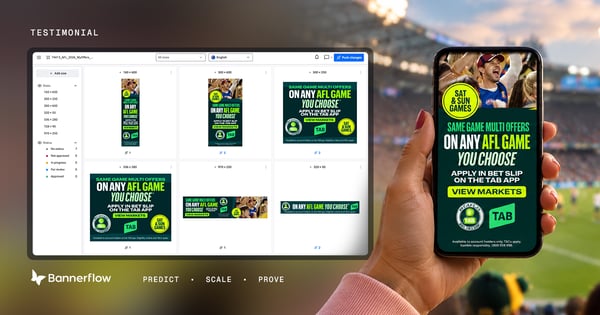
How Tabcorp turns hours of ad production into minutes with Bannerflow
Ad Technology & Automation
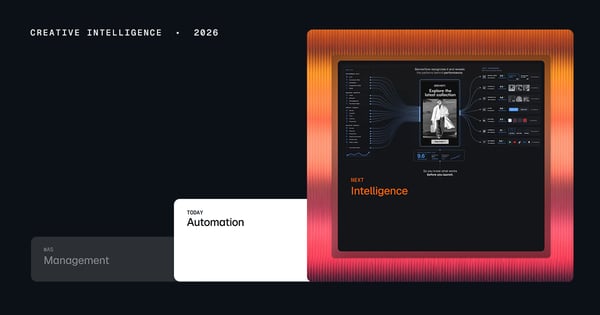
What Is Creative Intelligence in Advertising?
Ad Technology & Automation
What Are HTML5 Ads? (And Why They Beat Static & GIF)
Ad Creativity
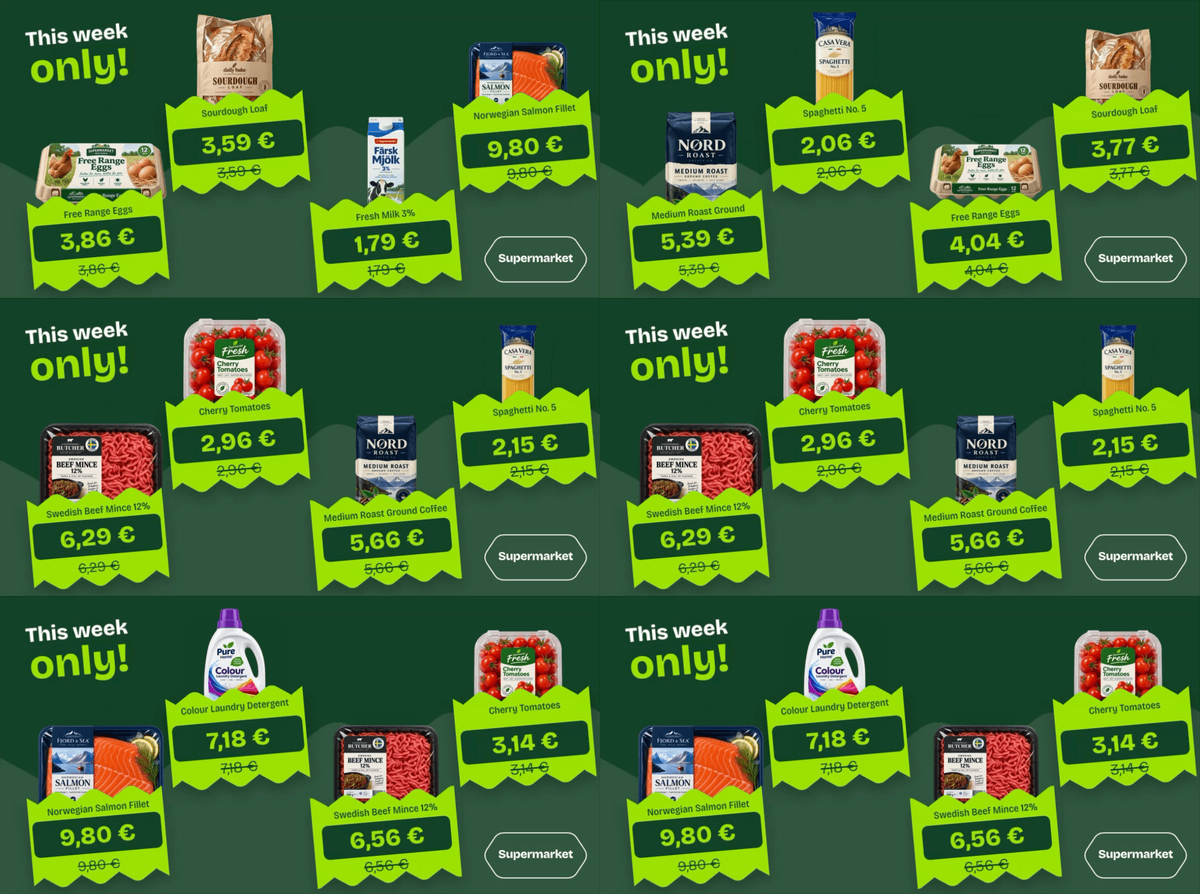
The Best Supermarket Ads, and the Ten Formats Behind Them
Advertising & Marketing Strategy

Why Supermarket Brands Use Bannerflow
Ad Technology & Automation
8 things to know about creative automation platforms
Ad Technology & Automation