
Last updated
Supermarkets run on a constant 7-day timeline. Every Monday, new offers arrive, a specific line gets repriced on a Wednesday, and by the time you get to Friday, there's a weekend push that wasn't a part of the original brief. All of this then needs to be communicated promptly across multiple touchpoints: display, paid social, the app, email, the screens above the checkouts.
That cadence is the exact reason why supermarket teams end up looking at a creative automation platform, and it's a different reason from the one most retailers have.
The short answer: Supermarket brands use Bannerflow because grocery advertising is a weekly production line rather than a quarterly campaign. One template produces every format and channel, and prices and offers come out of a product feed instead of a designer's hands. A campaign that's already live can be changed mid-week without rebuilding a single asset.
Key takeaways
- Grocery's production problem is change, not volume. The creative gets rewritten after it's already running.
- Building once and versioning out beats building per channel. Coop Denmark runs paid social, YouTube, display, its app, email, and in-store screens off the same templates.
- Feeds push price and offer data straight into creative, so pricing accuracy goes back to being a data question instead of a design risk.
- Nobody wants to spend more time on production than they already do. The return is increased relevance while production cost comes down.
Why supermarket advertising breaks normal ad production
Most retail advertising works in the typical campaign structure: brief, build, approve, launch, report. Grocery doesn't work this way. A new concept arrives roughly every week, and the creative often changes while the campaign is still running.
Klaes Simonsen, Senior Digital Strategist at Coop Denmark, puts this way of working plainly: "We have a new concept more or less every week, so we need flexibility to constantly evolve and do something new."
Then multiply that by the shape of a grocery business. Coop runs around 900 stores across three retail brands, SuperBrugsen/Kvickly, Dagli'Brugsen, and 365discount, each with its own positioning and price story. Every weekly concept has to exist for all of them, in every format, in every channel, and be correct on the day it runs.
When using the conventional methods of production, this becomes a per-channel build multiplied by a per-brand build multiplied by a per-format build. The level of manual output is what ends up leaving teams short, not their speed. And the first thing that gets dropped is the mid-week change that would have kept the campaign relevant.
What supermarket teams use Bannerflow for
| The job | What happens in the platform | Where it lives |
|---|---|---|
| Build once, run everywhere | One master creative generates every format and channel | Creative Studio, ad versioning |
| Get prices and offers right | Product feeds populate price, offer and product data | Dynamic ads |
| Change a live campaign | Scheduled swaps and mid-flight edits across live creative | Real-time campaign management |
| Run phased weekly activity | Weekly offers, weekend pushes and flash campaigns from one setup | Campaign publishing |
| Cover several store brands | Versions and translations from a shared master | Localization |
| Let the best version win | Automatic promotion of the strongest variant per placement | DCO, creative optimization |
| Prove it worked | Performance data at creative level, not campaign level | Real-time data |
The sections below cover the ones that matter most in grocery. For the wider picture, see creative automation for supermarkets.
One build, every channel
This is the capability that changes the scale and agility of your output. A designer builds a master creative and defines the rules for how its elements behave. The platform generates the rest: display sizes, social placements, video cutdowns, email, web, digital out-of-home and in-store screens.
"When we create a template, it's easy to produce it across different channels. We don't have to produce it for each channel separately," says Simonsen.
Not every creative automation platform works the same way. In a demo, press on how much control survives the automation. Rigid templates are why a lot of retail teams quietly stopped using their last platform. The tool scaled fine, but every new concept had to be forced into last year's layout. In Creative Studio, every element, color, and animation stays movable, which Simonsen calls "more of a blank canvas that we can fill in."
For supermarkets, this is also what makes the odd formats affordable. A recipe unit, an offers gallery, an in-banner search, a compare slider: all worth building when the build covers every placement at once, and all hard to justify when each one is a separate job. We walk through each of them in the ten supermarket ad formats.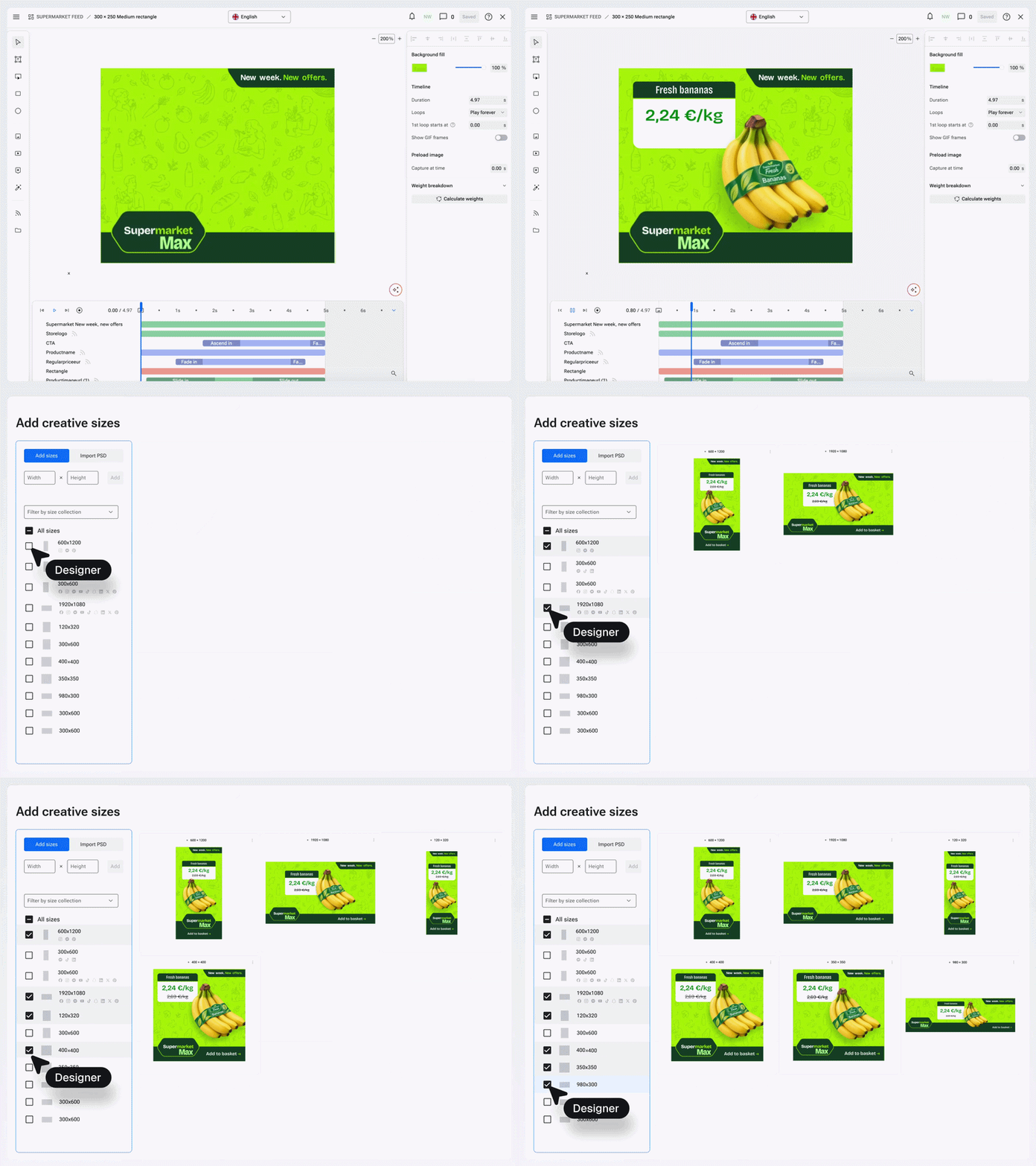
Prices and offers that come out of a feed
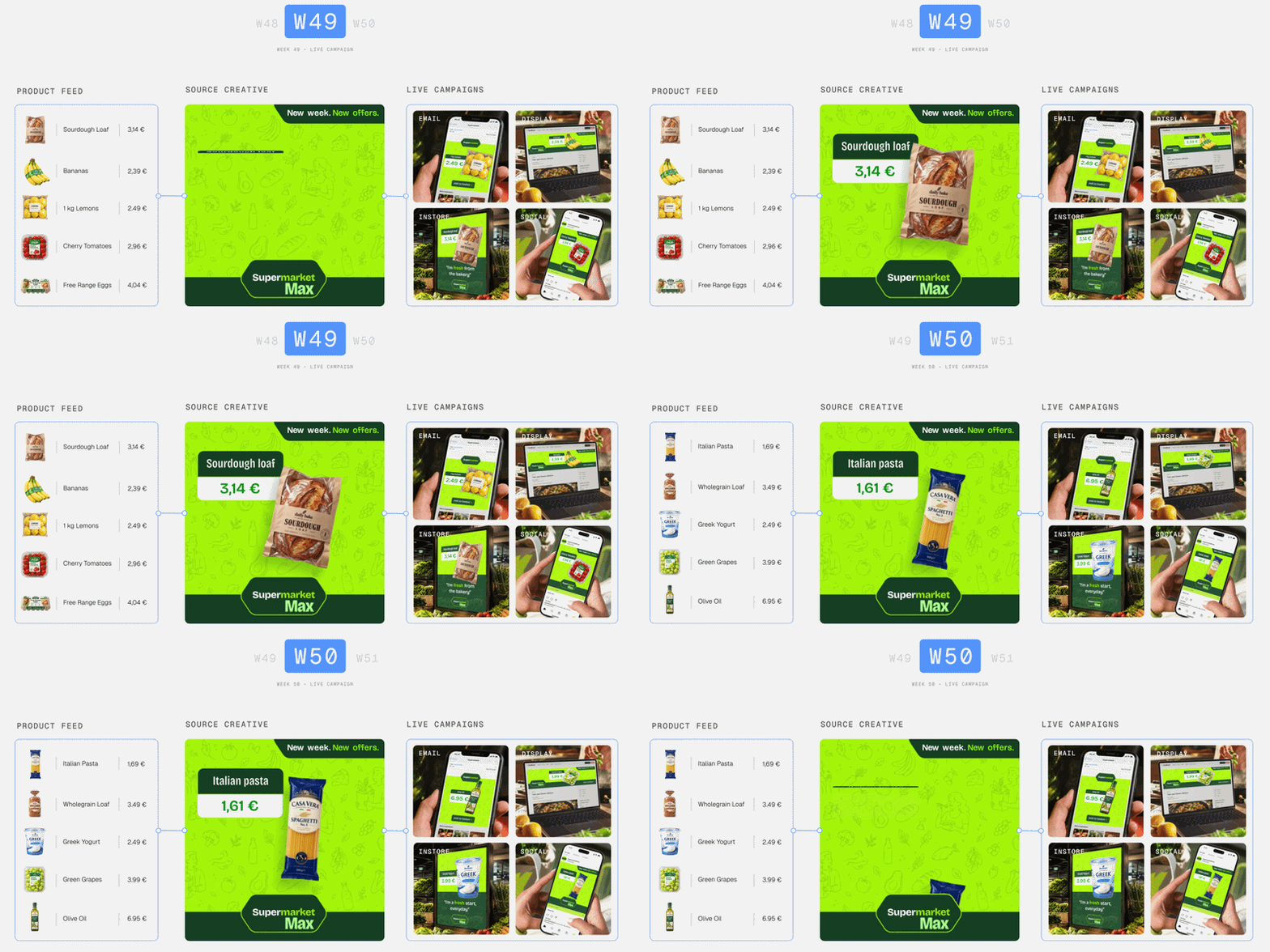
The second constraint in grocery is data. A weekly offers ad is a data-accuracy problem before it's a design problem, and hand-keying prices into creative is where errors get expensive.
Dynamic ads connect product feeds, CSV and XML sources directly into templates. Price, promotion, availability, and product detail map into the creative, so hundreds of SKU-level assets come out of a single build. Change the source and every format, variant and channel updates with it, without anyone reopening a file or re-exporting anything.
That's also what makes social product advertising practical at grocery scale. Conditional rules apply different templates, messages or layouts depending on the product or the campaign logic, so a promoted line and a full-price staple don't have to share a layout.
The pattern repeats elsewhere. In another Bannerflow retail account, one campaign designer covers close to all display production for a multi-market brand, because the feed carries the versioning and the translation work that used to be copy-and-paste.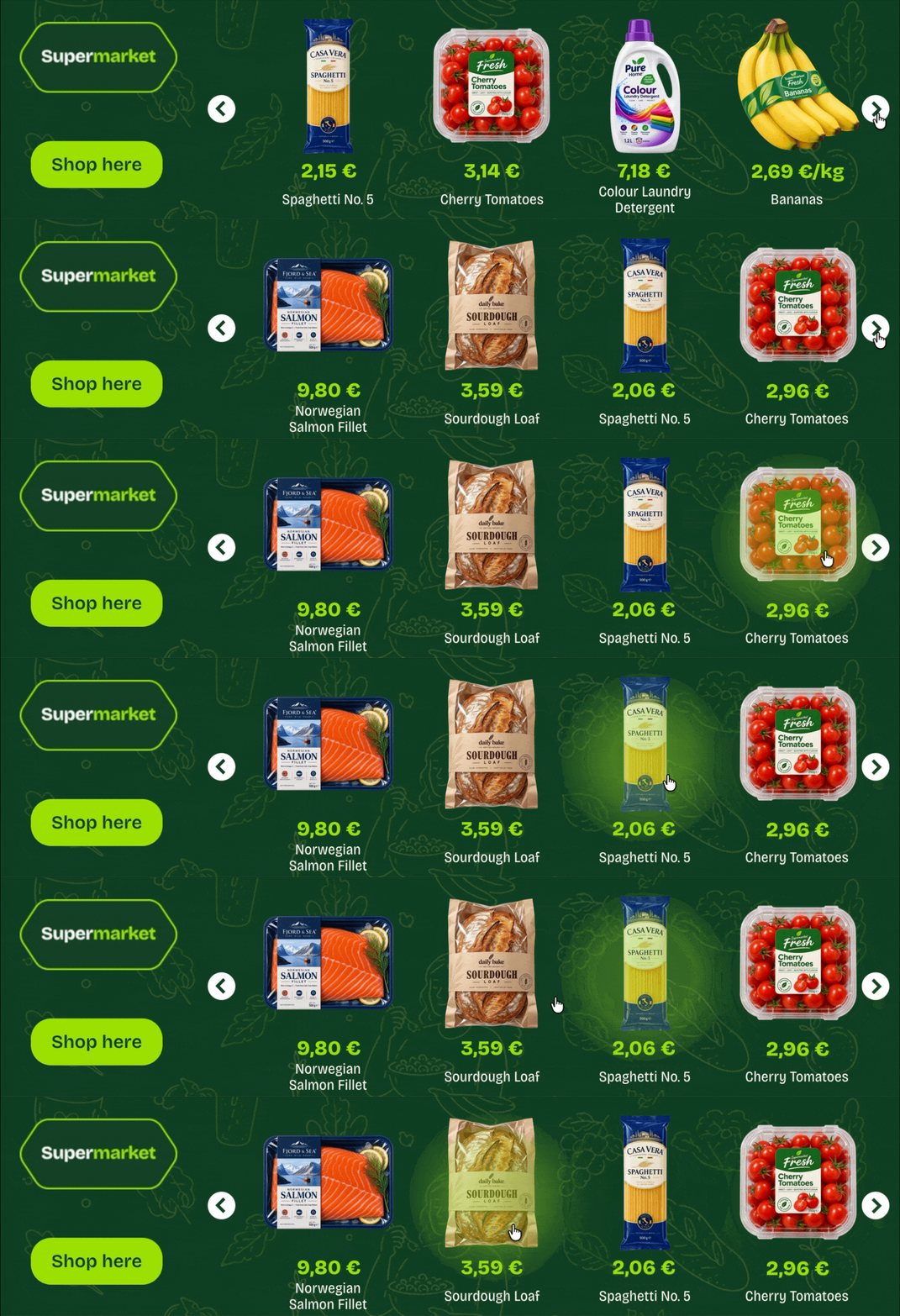
Changing a campaign that's already live
Grocery marketers change creative mid-flight far more than most categories do, and the conventional workaround is to pull the campaign and relaunch. That resets reach and frequency, which for a footfall KPI is the thing you were trying to protect.
"Monday we can have one creative that changes Tuesday. We can schedule these quick changes in Bannerflow," says Simonsen.
Scheduling handles the phases you already know about, like weekly offers, weekend promotions and flash campaigns, with content updated per phase against the same templates. Real-time campaign management covers the ones you don't. A competitor moves on price on Wednesday afternoon, and the response goes live without a rebuild.
Coop's core KPI is in-store footfall, and continuity is part of how that gets earned. Keeping a campaign alive while its contents change is the mechanism.
Several store brands, one master
Grocery groups rarely run one brand. Coop runs three, each needing its own tone and price positioning across shared campaign moments. Multi-market retailers hit the same wall in a different form, as language versions.
Localization keeps copy, translations and brand elements in one place and pushes them into every version from the shared master. Translation is the smaller half of it. The useful part is that changing a line once changes it everywhere that line appears, so a brand rule stays enforced rather than circulated.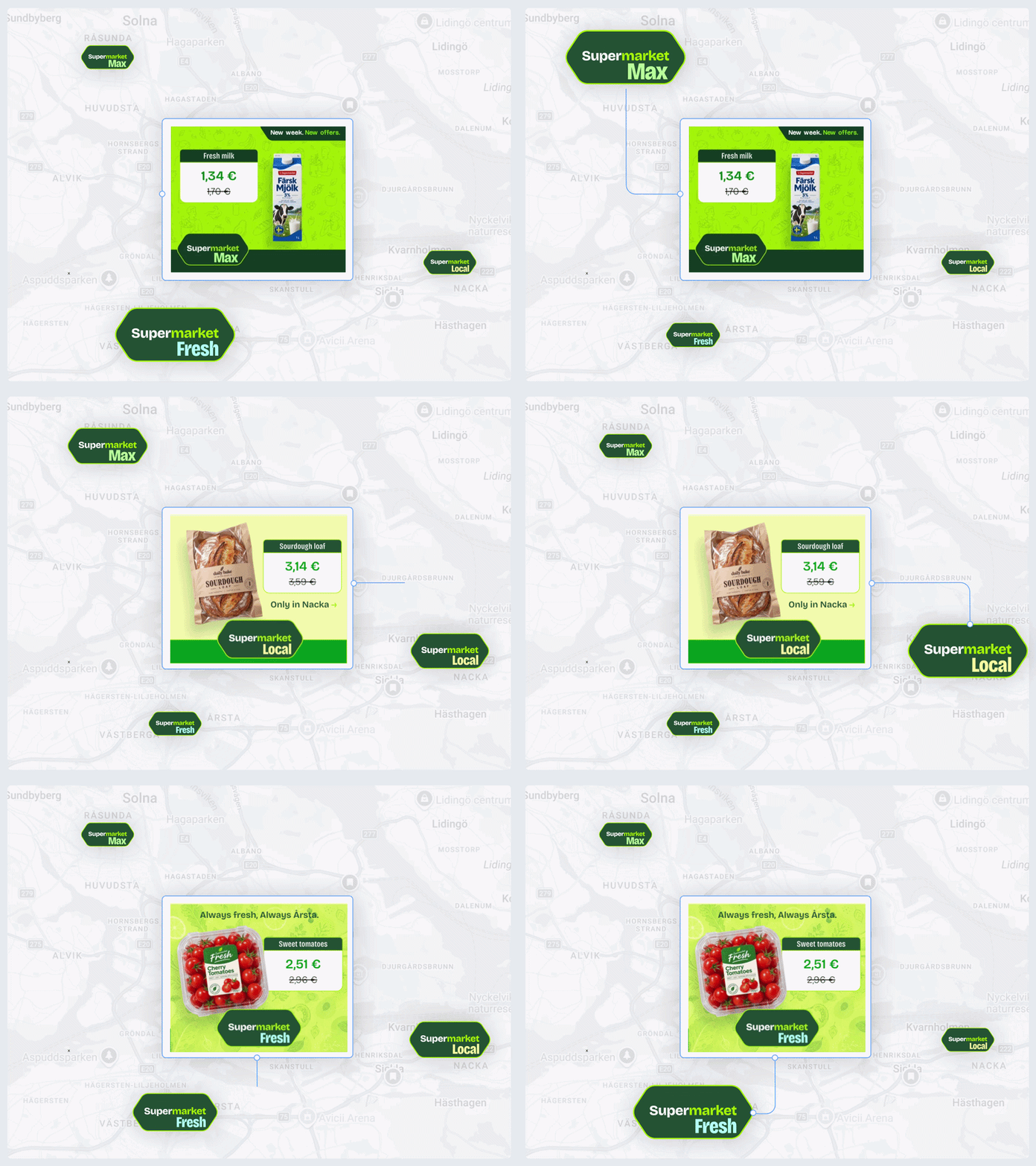
In-store and out-of-home, from the same file
Supermarkets own inventory most advertisers would pay for: screens in 900 stores, in front of people already holding a basket. It usually gets treated as a separate production job, with its own agency and its own deadlines, which is how a store screen ends up running a different version of the offer from the one in the feed.
It doesn't have to sit apart. The same master exports to in-store screens and DOOH alongside everything else, which is how the message a shopper saw on their phone that morning matches the one above the aisle that afternoon.
What it looks like at volume
Coop's numbers give a sense of a supermarket production line running properly: more than 31,000 creatives, over 6,600 creative sets, and 5.6 billion-plus impressions, across three brands and 900 stores.
For a business case, though, the more useful line is Simonsen's: "We're both saving time and money because we used to produce manually." Design, media and brand teams work in one connected system with a direct media connection, so approvals and go-live stop waiting on production. The time that frees up goes into evaluating creative and campaign performance, which is the work that moves the number.
Real-time data reports at the creative level rather than campaign level, so you can see which version earned the result. Auto-optimization then promotes the strongest variant per size and placement instead of picking one global winner, which matters when a 300x600 and a story frame are doing different jobs.
What Bannerflow doesn't do
It isn't a media buying platform. It connects to your channels and publishes into them, but budget, targeting, and bidding stay where they are today.
Creative direction stays with your team too. The platform makes a concept easy to produce across all your touchpoints, and deciding the concept is still somebody's job. A weak idea versioned 400 ways is a weak idea in more places.
And it isn't a product information system. It reads your feed, so feed quality is the ceiling on creative accuracy. Bannerflow's AI assisted feed setup, enables you to use natural language prompts to set up your feed exactly how you need it, removing the need for the technical expertise often required when setting up your feeds.
How to tell whether this is your problem
Four questions worth answering honestly before you book anything:
- In a normal week, how many hours go into producing the same concept for different channels?
- When a price changes on a Wednesday, what actually happens to the creative that's already live?
- How many people have to be involved before a new version goes out the door?
- Can you see performance by creative version, or only by campaign?
If two or more of those answers are uncomfortable, the constraint is production, and production is fixable.
See how Coop Denmark runs it, read more about creative automation for supermarkets, or book a demo and bring your worst week, the one with two concepts, a price correction, a bank holiday and a supplier who changed the pack shot on Thursday.
FAQs
What does Bannerflow do for supermarket brands?
It produces and manages advertising creative across every channel a supermarket runs, including display, paid social, video, email, app, web, DOOH and in-store screens, from a single template. Prices and offers are driven by product feeds, and campaigns stay editable while live.
Can it handle weekly promotions and price changes?
Yes. Product feeds populate price and offer data into creative, and a change at the source updates every format and channel. Scheduled swaps handle the planned phases, and mid-flight edits handle the unplanned ones.
Does it work for in-store screens as well as digital advertising?
Yes. The same master exports to in-store and DOOH formats alongside display and social, so store screens carry the same message as paid media.
How many creatives can one team realistically produce?
Coop Denmark has produced more than 31,000 creatives and over 6,600 creative sets across three retail brands. Lean teams tend to see the biggest shift, because feed-driven versioning removes the manual duplication that was eating the hours.
Does it replace our agency?
No. It removes production and adaptation work. Strategy and creative direction stay wherever they sit today, and most teams put the recovered time into optimization rather than into headcount.