
Last updated
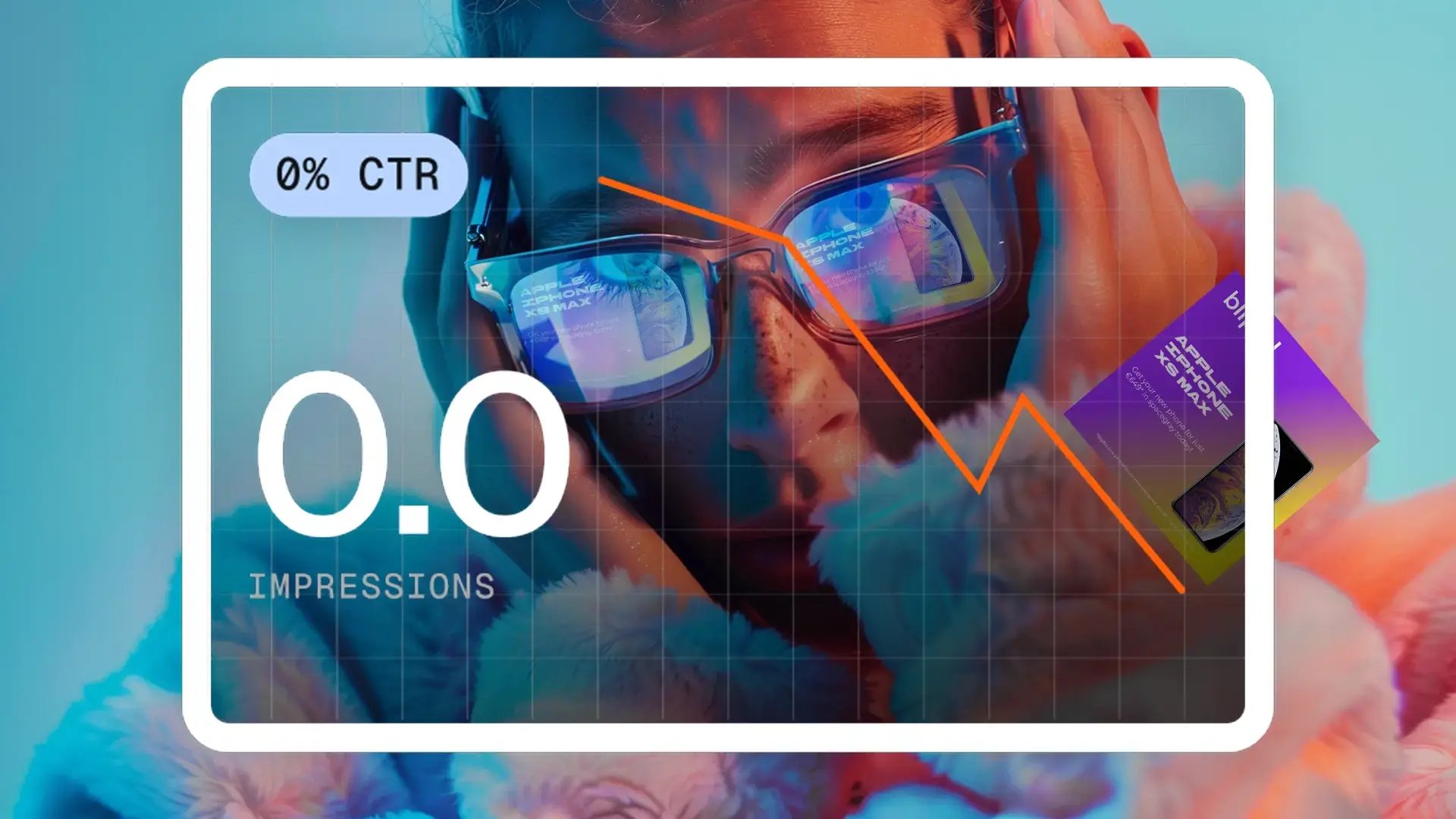
You have set the strategy, perfected your targeting, and your budget for your ads is allocated perfectly. But your campaign ROI is still not optimal. Your CTR seems to be plummeting, and conversion rates are uncharacteristically low. Could this be a sign of ad fatigue?
If so, you’re not alone. And the impact is bigger than you might think. 61% of consumers are less likely to buy from a brand that repeats the same ad, while 71% report being annoyed or extremely annoyed by repeated ads in mobile apps. Even more telling, 58% say they have chosen not to purchase because they saw an ad too frequently. Repetition doesn’t just reduce performance. It actively harms perception.
Ad fatigue: Prevention and solutions
In this article, you are going to learn about ad fatigue signs and understand when ad creatives stop performing. We’ll also take a look at how teams set up their campaigns to prevent ad fatigue from appearing altogether - so that you can prevent the issue instead of remedy problems after.
When does an ad creative stop performing?
To protect your campaigns from ad fatigue, you first need to know when an ad creative stops performing. That happens when incremental returns turn negative.
In simple terms, an ad creative stops performing when:
-
Additional spend no longer drives proportional results
-
Increased exposure doesn’t improve outcomes
Campaign performance plateaus or declines
Ad fatigue: the signals your ad creative is no longer working
Ad fatigue doesn’t happen all at once: it shows up in patterns. The first signal is performance decay. Metrics like CTR, conversion rate, or engagement begin to decline over time, even if spend and targeting remain consistent. This is a sign your audience has seen the creative too many times and is starting to tune it out.
At the same time, you may notice frequency increasing without incremental return. You’re reaching the same users more often, but those extra impressions aren’t driving additional conversions. This is where efficiency starts to break down. Finally, audience saturation signals begin to appear. Engagement drops, users stop responding, and your ads blend into the background. Together, these signals indicate that your ad creative hasn’t just slowed down: it’s no longer working the way it should.
Ad fatigue: the aspects to keep in mind
While ad fatigue is a frequent problem in ad campaigns, there are specific things you can do to protect your ad campaign. Here are the four most important things to take into account to prevent ad fatigue:
Audience size
Audience size matters for ad fatigue. Having an ad creative shown to 150.000 people for a week might be fine, but if you show the same creative to 20.000 with the same ad spend it’s probably going to appear to the same people frequently, leading to banner ad blindness. When it comes to ad fatigue, repetition is a strong factor that you need to avoid.
Tip: The smaller the audience, the faster you will need creative variation.
Spend
Increased spend doesn’t always equal better ad performance. If your audience pool remains the same, raising ad spend will result in the same audience seeing the ad creative more often. That doesn’t raise your campaign ROI - on the contrary, you’re just speeding towards ad fatigue.
Tip: Increased spend should come with ad creative variations.
Ad frequency
Ad frequency is a factor you need to calculate and monitor closely. There is a fine line between your audience seeing the ad enough to catch and retain attention, and seeing it too often, leading to ad fatigue.
Tip: Remember to add a frequency cap for all your ad creatives.
Creative variation
You might have created the most eye-catching, on-spot ad creative in the market. But having just one ad creative is not enough - even if it’s overperforming to begin with. When it comes to ad campaign performance, creative variation is necessary. The fewer variations you have, the faster fatigue sets in.
Tip: Remember that balance is key: you want enough creative variations to rotate in your campaign, but not so many that your team is drowned in production.
What high-performing teams do differently
All marketing teams experience ad fatigue from time to time. While you can use best practice to prevent it, it’s not always possible. But the difference between a good team and a really high-performing one isn’t whether they experience ad fatigue: it’s how they manage it. So, let’s look into what a high-performing team does to manage ad fatigue effectively.
They monitor trends, not just results
High-performing teams spot ad fatigue before it impacts outcomes. To do that, they monitor more than basic metrics. Instead of evaluating an ad creative based on a single report, they analyze performance curves, asking questions that span timelines, like:
-
Is CTR gradually declining week over week?
-
Are conversions plateauing despite stable spend?
-
Is engagement dropping even though impressions are rising?
These questions help them spot ad fatigue early, before it becomes a significant ad performance issue.
They also focus on incremental returns. The question stops being ‘Is this ad performing well?’ and shifts to ‘Is each additional impression still worth it?’. The moment marginal returns decline, creative fatigue has already begun - even if top-line numbers look stable.
When it comes to incremental returns, teams look into:
-
Cost per incremental conversion
-
Performance as spend increases
-
Whether scaling still produces proportional results
-
They refresh creatives proactively, not reactively
Don’t wait until ad performance drops to come up with a plan. Ad fatigue moves fast, and your ROI follows by plummeting even faster. High-performing teams are prepared in advance.
Plan refresh cycles before kicking off your ad campaign. Make sure to introduce ad variations before ad fatigue shows its first signs. And remember to treat creative as a continuous process. To high-performing teams, ad creation is not a one-and-done task, but a process that needs to be frequently repeated.
Use structured creative systems, not one-off assets
Most teams still rely on one-off ad creatives: producing a handful of variations, identifying a “winner,” and scaling it until performance drops. But this approach almost guarantees ad fatigue and banner blindness, as the same message is repeatedly shown to the same audience.
High-performing teams take a different approach. Instead of building isolated assets, they create structured creative systems made up of modular components (headlines, visuals, and messaging) that can be recombined and adapted over time.
This makes it possible to iterate faster, personalize more effectively, and keep creatives fresh for longer. Rather than reacting to declining performance, these teams continuously introduce new variations and evolve their messaging as campaigns scale.
Align media and creative teams
One of the most overlooked drivers of ad fatigue isn’t the creative itself: it’s misalignment between teams. Media teams scale spend and push reach, while creative teams often lag behind, working on separate timelines. This leads to the same ad creative being shown more frequently, accelerating fatigue and reducing the effectiveness of your ad campaign.
To close this gap, you need to connect your media and creative workflows. Make sure your creative evolves alongside performance data, using insights to guide what you refresh, test, or replace. Plan your media strategy with the creative lifecycle in mind, so you’re introducing new variations as campaigns scale rather than reacting after performance drops.
From fixing fatigue to preventing it entirely
Ad fatigue isn’t just a performance issue. It's a sign that your creative approach needs to evolve. By the time results drop, repetition and lack of variation have already taken their toll.
Instead of reacting to declining performance, focus on preventing it. Monitor trends, plan creative refreshes in advance, and align media with creative execution. The brands that succeed don’t rely on one winning ad: they build systems that keep creatives fresh, relevant, and performing over time.